

- This event has passed.
Discussion: Urban Activism – Working for Change on a Local Scale
Climate activists, gluing themselves to paintings or blocking roads, know their tactics make people angry – yet they believe that it’s a price worth paying. In the streets of Baltimore, activists’ demand for social justice is not a tactic, but rather a “fundamental aspect of life”. For others, activism is an understanding of human agency translated into acts of courage and bold solutions in their local communities.
Museums and Archives on both sides of the Atlantic, like The Museum of the City of New York, have dedicated exhibitions to urban activism, using the topic to foster awareness, encourage critical thinking, and stimulate dialogue. Even museums are moving into more activist activities themselves, so how is activism developing from the past into the future?
In many ways, activists are facing very similar issues as those in the past: Like climate protesters, the suffragettes were not loved a hundred years ago. The same pressures are re-emerging today. And there is the same need – if not a greater need — for self-organization of ordinary people. However, at a time when we seem to frame everything in moral terms, activism may have gone a step further and become as much a part of our civic responsibility as paying council tax or jury duty. From local volunteering in soup kitchens to making one’s voice heard on the streets.
Join us for a timely conversation co-hosted with The Urban Activist to discuss what activism means to people, its power to create positive change, and how it has been evolving over the past decades.
With Co-Founder and Executive Director of Street Lab New York Leslie Davol, award-winning policy advocate, liberation and food activist Eloísa Trinidad, Baltimore based photographer and educator Devin Allen and academic-activist and advocate for fair digital labor practices Trebor Scholz. Moderated by Sarah Seidman, Puffin Foundation Gallery Curator of Social Activism at the Museum of the City of New York and the curator for the ongoing exhibition “Activist New York”.

Leslie Davol is Co-Founder and Executive Director of Street Lab, a ten-year old nonprofit that creates and shares programs for public space across NYC. Leslie founded the organization along with her husband, Sam Davol, in Boston, where the organization’s early projects led Boston Globe columnist Yvonne Abraham to call Leslie and Sam “visionaries when it comes to breathing life into neglected public spaces.” Prior to starting Street Lab, Leslie had a career in museums and the cultural sector in NYC, including serving as Assistant Vice President for Memorial, Cultural, and Civic Programs for the Lower Manhattan Development Corporation following September 11.
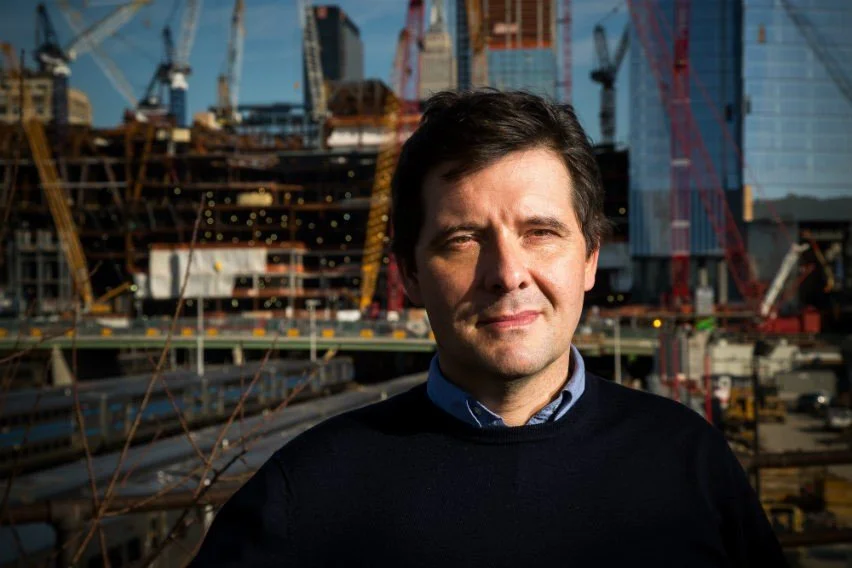
R. Trebor Scholz, a researcher, author, and advocate for fair digital labor practices, serves as a professor at The New School in NYC and founding director of the Platform Cooperativism Consortium, as well as a Faculty Affiliate at Harvard University’s Berkman Klein Center for Internet and Society. Scholz, known for developing the concept of platform cooperativism, is a global keynote speaker championing worker-owned online platforms, with his impact widely acknowledged by news outlets such as The New York Times and The Financial Times.

Eloísa Trinidad is an award-winning policy advocate, liberation activist, educator, and artist. She is Executive Director at Chilis on Wheels, where she works to make Veganism accessible to communities in need through direct food relief, policy, education, and mentorship, and the founder of Vegan Activist Alliance, a systems-change focused, community-driven, anti-speciesist, anti-colonial organization founded on the belief that all Beings have a natural right to their autonomy and to live free from oppression regardless of species. As an AfroIndigeous Latina, Eloísa approaches liberation praxis and Veganism with an anti-colonial framework to raise awareness of how Western colonization has affected and continues to impact the plight of humans and beyond-human persons (animals), our relationship to each other, and the natural world. Through this lens, she works with national and international coalitions and organizations as an advisor to develop community-informed strategies and policies to transcend poverty, mitigate climate breakdown, and transform our food system.
VENUE ACCESSIBILITY
Unfortunately, 1014 Fifth Avenue is in the process of being refurbished, and is not fully accessible in its current state. We apologize to our guests and kindly ask you to contact j.stubbs@1014.nyc if you need further information or assistance. We will do our best to enable everyone to join us.